The draft below provides a ready-to-use framework to help municipal fleet agencies apply for 2026 Safe Streets for All (SS4A) grant funding to test active Intelligent Speed Assistance (ISA) and measure its impact.
Use this draft language as a starting point for describing an ISA pilot in your SS4A application. Be sure to tailor all bracketed sections and align the content with your community’s needs, fleet characteristics, and proposed activities.
Active Intelligent Speed Assistance (ISA) for Fleet Safety: Pilot Overview
High speeds remain one of the most significant and preventable contributors to traffic deaths and serious injuries, increasing both crash risk and severity. Fleet vehicles present a key opportunity for intervention: they are centrally managed, operate at scale, and can help set the pace for safer driving. Implementing active Intelligent Speed Assistance (ISA) offers a low-cost, quick-to-deploy way to manage speeds and reduce risk, while generating data to inform and strengthen speed management strategies within [an existing or developing Vision Zero/Roadway Safety Action Plan].
To demonstrate the effectiveness of active ISA in [NAME FLEET], we propose a [DURATION] pilot program across a [DEPT OR VEHICLE GROUP, NUMBER OF VEHICLES]-vehicle fleet. This trial will enable [NAME FLEET] operators to evaluate the technology’s impact on driver behavior, safety outcomes, and operational efficiency, while generating actionable data to inform broader deployment decisions. This pilot will allow [AGENCY NAME] to test logistics, communication, and internal policy alignment before scaling.
o [DURATION]: 12 months
o [DEPT OR VEHICLE GROUP, NUMBER OF VEHICLES]: A statistically significant number of vehicles (i.e. 20-100 vehicles or more)
o Staff education and FAQs before launch
o Continuous monitoring
o Data-backed evaluation of effectivenes
The pilot will track the following key performance indicators (KPIs) to measure impact:
● Reduction in Speeding Events: Percentage decrease in instances of drivers exceeding posted speed limits against the baseline.
● Speed Compliance Rate: Increase in time spent driving within legal speed thresholds.
● Driver Behavior Improvement: Reduction in harsh driving behaviors often correlated with speeding (e.g., hard braking, rapid acceleration).
● Incident Reduction: Change in the number of safety incidents during the pilot period.
● Fuel Efficiency Impact: Improvement in fuel consumption linked to more consistent, compliant driving speeds.
● Driver Acceptance and Usability: Feedback scores from drivers and fleet managers on ease of use and perceived value.
● Time Savings in Fleet Management: Decrease in time spent overseeing fleet speeding behavior, violations, and related incidents.
A before-and-after study of the effectiveness of the demonstration activities
A summary report at the end of [TIME PERIOD] will compare baseline data to pilot results, providing a clear assessment of safety improvements and return on investment.

Active Intelligent Speed Assistance (ISA) is an advanced safety technology designed to actively reduce speeding-related risks across fleet operations. Unlike traditional passive warning systems that simply notify drivers, ISA provides real-time speed management to help ensure compliance with posted limits and enhance overall road safety, for both fleet drivers and the communities they serve. ISA does not limit braking or driver response. It only prevents the vehicle from accelerating beyond safe speeds.
Continuous monitoring and active speed limiting keep drivers within legal speed limits, increasing road safety and reducing violations and liability exposure.
Immediate feedback informs drivers of upcoming speed limit changes to increase awareness and improve long-term driving behavior.
By minimizing the need to constantly check speed limits, ISA allows drivers to stay focused on the road.
The system is compatible with nearly all vehicles, easy to install, and intuitive for fleet managers to use.
ISA can integrate seamlessly with existing telematics systems or operate as a standalone solution. This flexibility provides fleets with valuable insights into driver behavior and overall fleet performance, supporting safer and more efficient operations.
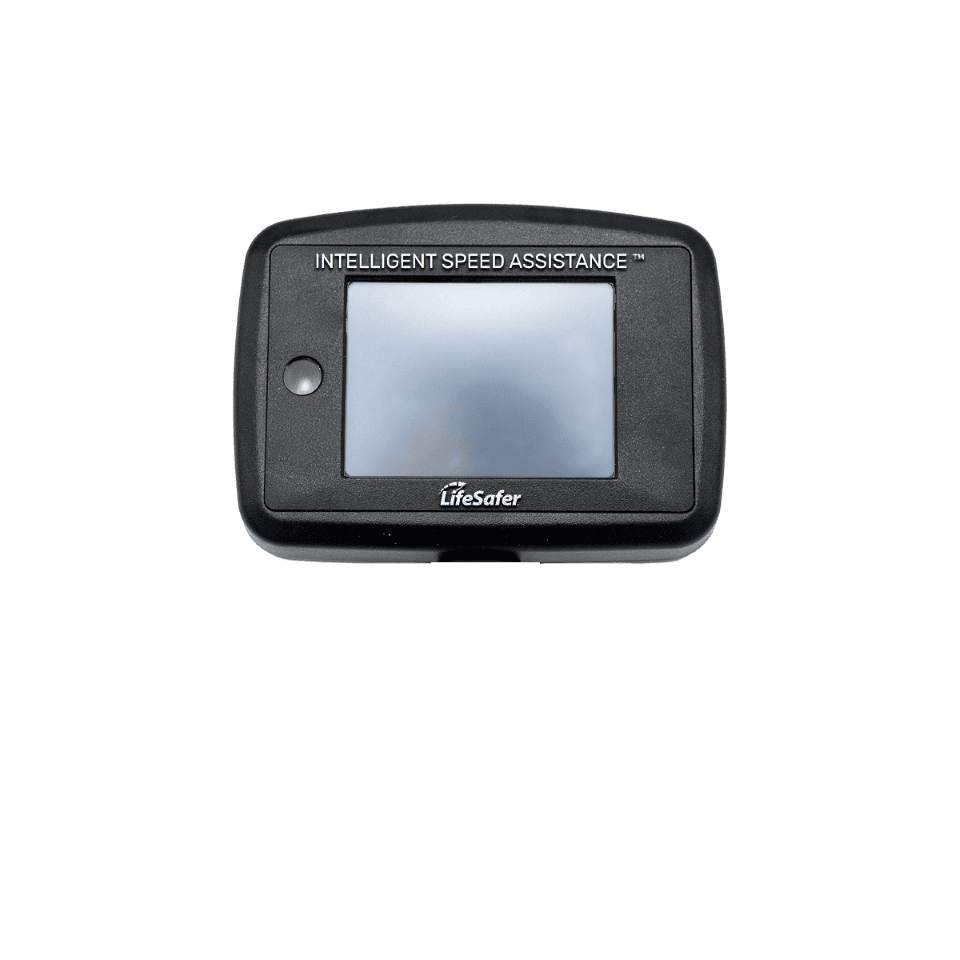

● CFSA implemented ISA across nearly its entire fleet within approximately two weeks, pairing installation with staff education, FAQs, and ongoing communications.
● Monthly speeding incidents dropped from 47 in July 2024 to just 4 in July 2025.
● A 91% reduction in speeding incidents after active ISA was implemented.
● A USDOT Volpe Center evaluation found that 99% of miles driven by ISA-equipped city vehicles were at or below the set speed threshold. The study also documented substantial reductions in high-risk speeding, particularly at higher speed limits.
● This study found an over 64% relative decrease in speeding drive time following ISA activation.
● Across fleets with active ISA, speeding and related violations declined, and most reported downstream safety benefits such as fewer hard braking events or potentially longer following distances.
● All eight fleets that implemented an ISA program saw reductions in speeding and other unsafe driving behaviors.
● Several fleets also noted improved scores from the Federal Motor Carrier Safety Administration’s Compliance, Safety, Accountability program as speed violations diminished, and roadside inspections decreased. For one fleet, the CSA score fell from about 65 to 20.
● One fleet estimated a 30% reduction in preventable collisions after ISA installation.
● One fleet saw speed camera tickets drop from an average of 6–8 per week before ISA to just 1 over 9 weeks after installation.
● Another described a situation where ISA helped a driver experiencing a seizure by preventing acceleration, suggesting that ISA can mitigate risks during medical emergencies.